Drywall Installation & Repair in the Denver Metro Area
If your house was built after 1945 or so, the walls and ceilings are probably made of drywall. Also called Sheetrock, also called wallboard.
It’s the building material of white chalky substance compressed between heavy paper facing. You might have seen it in Home Depot. It comes in large 4’x8’ sheets (also 4’x12’). These are called sheets.
The white stuff is a mineral called gypsum.
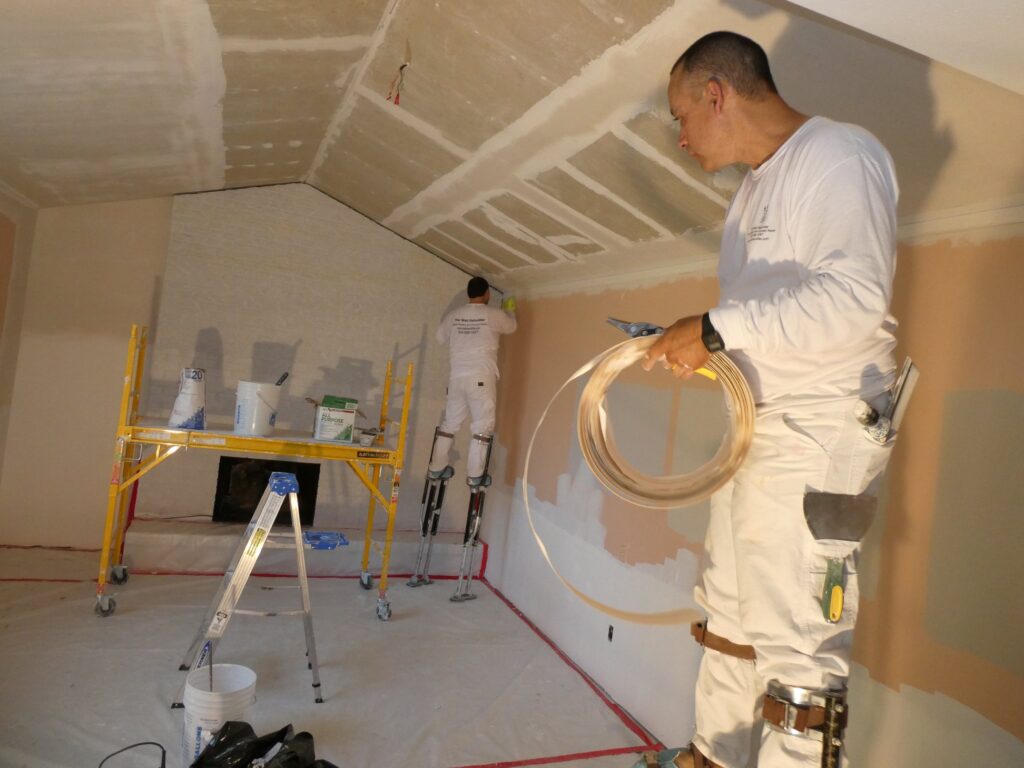
It’s installed by screwing it into the studs, and then using joint compound (“mud”) and paper tape or mesh tape to cover the seams and make it all smooth. If you want a textured surface, texture is applied (many newer textures are sprayed on like orange peel, some are hand applied). This mudding tape and texture process is technically called Finishing.
Garage & Basement Drywall Finishing
Transforming an unfinished garage or lower level into a clean, functional living space starts with solid drywall work. Whether you are building out a home office, adding an extra bedroom, or upgrading a garage into a warm workshop, finishing raw framing requires precision at every step.
We manage the complete drywall finishing process from start to finish:
Insulating: installing standard rolls of insulation to fit your framing.
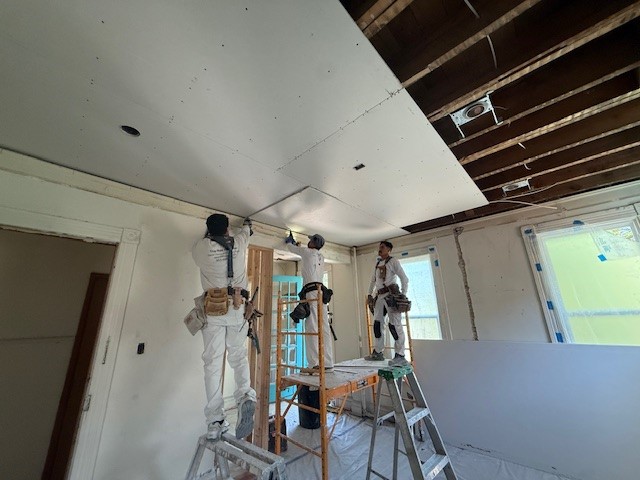
Hanging the Drywall: Precision measurement, cutting, and hanging of standard, fire-rated, or moisture-resistant panels tailored to local building requirements.
Taping & Mudding: Applying multiple smooth coats of joint compound with careful sanding as needed between applications to build seamless, strong joints and flat surfaces.
Making it Smooth or Textured: Applying texture or giving it a smooth finish, your choice
Ready for Paint : Leaving your new garage or basement completely prepped with a smooth finish or customized texture match, ready for priming and painting.
Whether starting from bare studs or taking over a partially completed DIY project, professional drywall installation ensures a smooth, durable finish that lasts.
Drywall Hole & Patch Repair
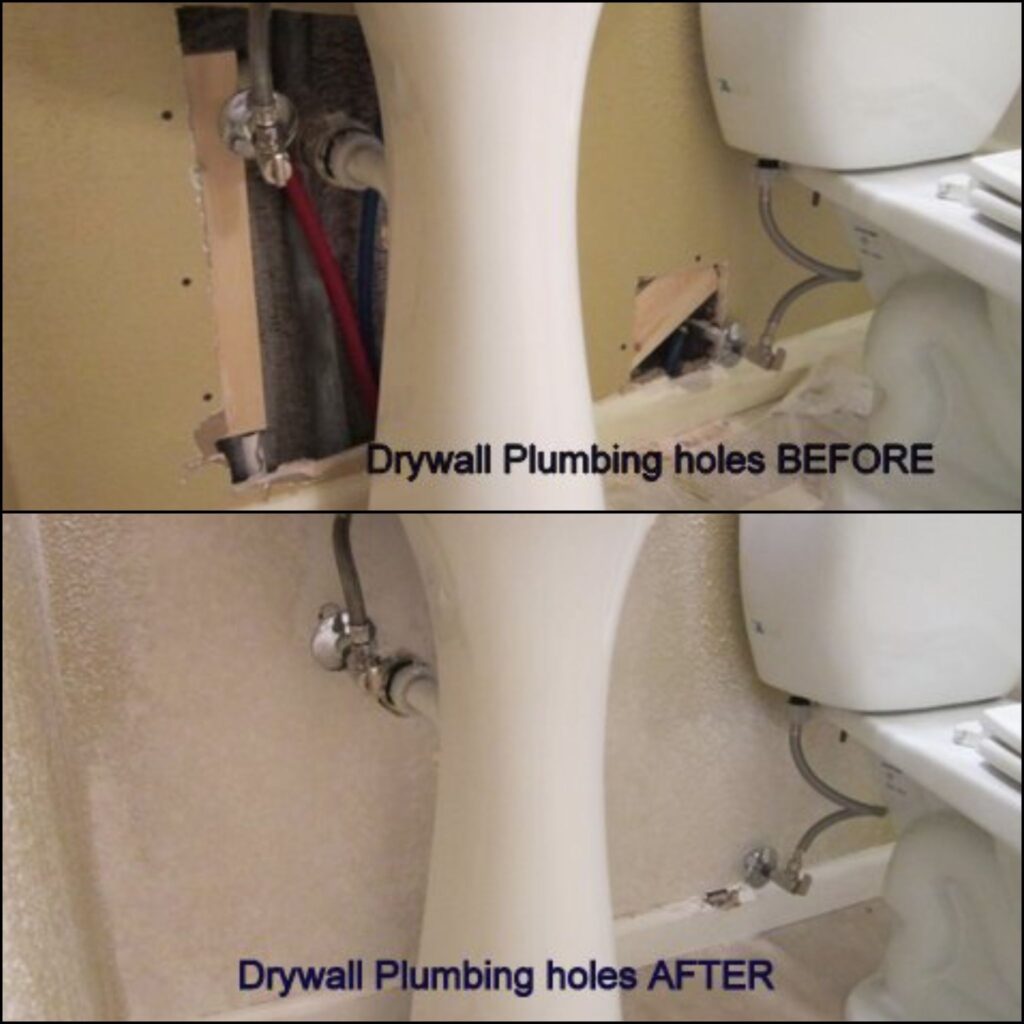
Accidents, home upgrades, and essential utility work often leave unwanted holes in your walls and ceilings. Whether you have large cutouts left behind by plumbers or electricians, or minor damage from everyday life, repairing the drywall requires more than just filling a gap—it takes proper backing, careful mudding, and expert texture matching to make the repair completely invisible.
We handle drywall patch repairs of all sizes, including:
-
Electrical & Mechanical Openings: Patching drywall cutouts left behind after panel upgrades, light fixture relocations, outlet installations, or rewiring projects.
-
Plumbing Access Cutouts: Repairing wall and ceiling holes opened up to repair pipes, fix leaks, or install new fixtures.
-
Accidental & Everyday Damage: Fixing holes caused by doorknobs, furniture moves, wall anchors, or accidental impacts.
Our repair process involves cutting clean borders around the damage, installing solid backing support, setting new drywall, and applying smooth mudding coats. We finish every job by matching your surrounding wall texture so the repair blends seamlessly once painted.
Texture Application, Removal & Custom Texture Matching
We provide comprehensive drywall texturing services tailored to your aesthetic and project needs:
- Custom Texture Matching: blending patches and repairs into existing walls and ceilings.
- Hand-Applied Textures: Crafting classic textures surfaces by hand.
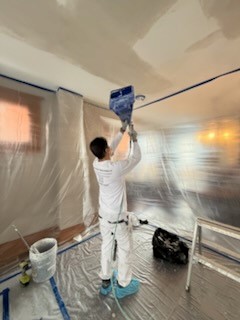
- Spray-Applied Textures: Utilizing specialized spray equipment to deliver consistent, uniform patterns across large areas, ceilings, and walls.
- Texture Removal & Surface Smoothing: Scraping away and smoothing out outdated acoustic popcorn ceilings or heavy, uneven textures to prepare surfaces for a clean, modern finish.
Water Damage & Flood Cut Repair
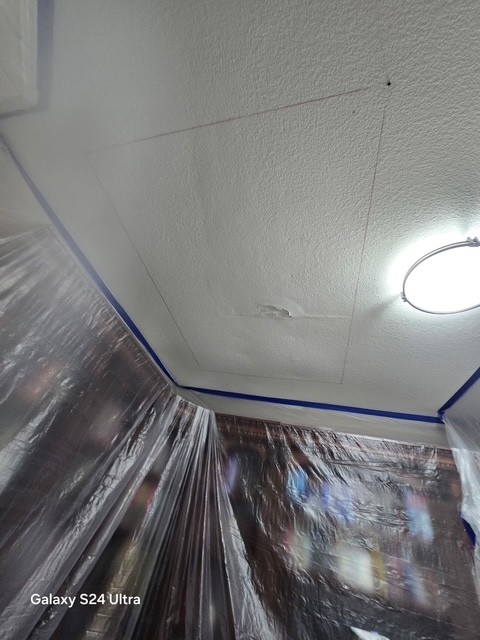
Water intrusion from burst pipes, plumbing leaks, heavy storms, or basement backup requires immediate attention to protect your home’s structure. Once the water source is addressed and drying or mitigation is complete, restoring damaged walls and ceilings is the critical final step to making your space whole again.
We handle water damage restoration and drywall repair with precise attention to structural integrity and finish:
- Flood Cut Repairs: Replacing drywall that was cut back—typically 12 to 24 inches above the water line—during mitigation to ensure compromised, wet material and insulation are completely removed.
- Ceiling & Leak Patches: Removing sagging, water-stained, or damaged drywall panels on ceilings caused by upstairs plumbing leaks or roof intrusion, installing new board, and reinforcing supports.
Seamless Restoration: Executing clean joint taping, multi-coat mudding, and precision texture matching so the newly restored area blends invisibly into the surrounding original walls once painted
Drywall Basics: Frequently Asked Questions
What is the difference between hanging, taping, mudding, and texturing?
- Hanging: Measuring, cutting, and securing raw drywall sheets (gypsum board) directly to wooden or metal wall framing.
- Taping: Applying paper or mesh tape over the seams where drywall panels meet to prevent cracks.
- Mudding: Applying multiple coats of joint compound over the taped seams and fastener heads, sanding smoothly between each coat.
- Texturing: Applying a spray or hand-applied texture to match the surrounding wall style before painting.
- Smooth Finishes (Levels of Smoothness): If you are going with a smooth wall or ceiling rather than a textured finish, there are standardized levels of finish depending on your final look:
- Level 4 Smooth: This is the classic drywall finish. All joints and nail holes taped and mudded several times.
- Level 5 Smooth (The Highest Quality): A full skim coat of joint compound applied over the entire wall surface to conceal all imperfections, joint banding, and sheen differences under paint. Highly recommended for high-gloss paints, smooth accent walls, or rooms with heavy natural side-lighting.
How long does a typical drywall patch or repair job take?
Because we use fast-setting joint compound (“hot mud”) that sets in 5, 20 or 45 minutes, most small to medium patch repairs can be completed in a single day. This allows us to apply multiple coats, sand, and complete your texture match in just one visit—getting your home back to normal faster without sacrificing quality.
Do I need special moisture-resistant drywall for basements or garages?
Yes. Standard drywall works great for everyday living areas, but spaces exposed to humidity, potential moisture, or strict building codes require specialized board:
- Purple Board: Highly recommended for basements and garage areas. Purple drywall offers premium mold and moisture resistance throughout the entire board—not just on the paper surface—making it ideal for below-grade walls or damp environments.
- Greenboard: A traditional moisture-resistant option suitable for areas with occasional dampness.
- Fire-Rated (Type X) Drywall: Garages frequently require 5/8-inch Type X fire-resistant board on shared house walls and ceilings to meet local Denver area building codes.
How about in a bathroom. What type of drywall or backing board is required for bathrooms or behind tile?
Bathrooms and wet areas require specific wallboards to prevent water damage, mold growth, and tile failure:
- In Wet Areas (Showers & Tub Surrounds): Standard drywall or greenboard should never be installed directly under tile in wet areas. Shower walls require dedicated cement backer board (like Durock or HardieBacker) or waterproof foam boards. These non-porous boards provide a rigid, waterproof foundation that prevents tile and grout from failing due to moisture penetration.
- On Bathroom Walls & Ceilings (Non-Shower Areas): Premium mold- and moisture-resistant Purple board or greenboard is ideal for general bathroom walls and ceilings exposed to daily steam and condensation from showers.
Can old wall or ceiling textures be smoothed out?
Yes. Dated or heavy textures—like popcorn ceilings or uneven trowel finishes—can either be scraped down and skim-coated smooth, or covered with a thin layer of new drywall depending on the condition of the original surface.
How do you control dust and protect the home during drywall repairs?
Drywall repair can create fine dust, but we take active steps to contain the workspace and protect your home throughout the repair process:
- Site Preparation & Masking: We mask off nearby doorways and living spaces with plastic sheeting and lay down protective floor coverings across high-traffic walkways before work begins.
- Thorough Clean-Up: Once the drywall work and any texture application are complete, we pack up all debris, sweep down the work zone, and leave your room clean and ready for the next phase.
Ready to get started?
Tell us about your project and we’ll help you understand your repair options and next steps.